Driving Research Impact and Building Global Networks: Insights from a SMAR3TS Secondment at RMIT University

By Md Enamul Hasan, PhD Candidate, University of Vaasa, Finland
Empirical research in accounting and finance moves quickly, and staying current with methods, networks, and real-world relevance is a constant challenge for early-career researchers. Understanding how to sharpen methodological rigour, build international connections, and translate research into impact was at the core of my secondment at RMIT University, hosted by Dr Tarek Rana.
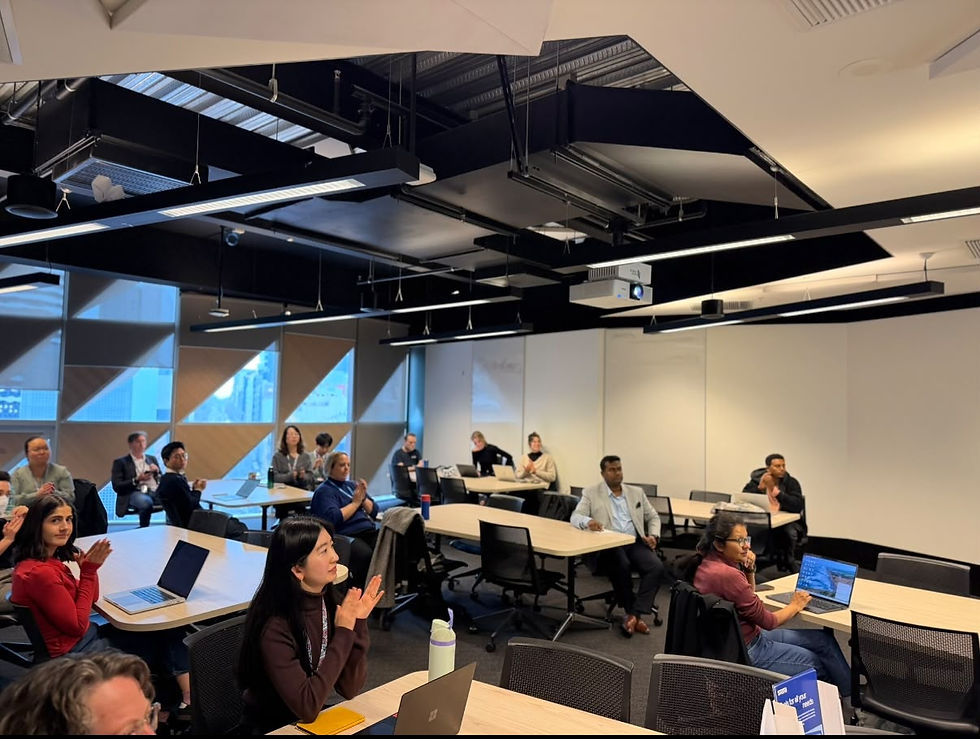
During the secondment, I attended the AFAANZ annual conference, where I discussed research with peers and reconnected with colleagues met earlier this year at the European Accounting Association conference. I also took part in a session on causal inference and applied Stata techniques hosted by RMIT's College of Business and Law, followed by a lecture from Stata Corp. on how better data infrastructure, visualization, and automation can strengthen the research pipeline.
“This secondment gave me direct access to leading researchers and hands-on technical training I couldn't have gotten from a conference alone. It has genuinely accelerated where I am in my career.”
A particular highlight was RMIT's “Joined-Up Research – Connecting for Impact” event, including a workshop on moving from funding calls to full research consortia, which pushed me to think about my research less in terms of publication counts and more in terms of downstream, real-world contribution. I also attended RMIT College of Business and Law's Three-Minute Thesis competition, gaining concrete ideas on storytelling and audience engagement, and completed the AFAANZ “Python Coding for Accounting and Finance Research” course at UNSW Sydney, covering data analysis, textual analysis, NLP, machine learning, and generative AI applied to real accounting and finance research.


“Moving from my home institution in Finland into RMIT's research community in Australia exposed me to different academic cultures, funding systems, ways of working, and to industry-facing initiatives like AccountingPod and StataCorp's applied tools, which I wouldn't have encountered otherwise.”
Based on discussions with my host supervisor, Dr Tarek Rana, we initiated a new co-authored research project examining corporate responses to environmental violations, a direct contribution to collaborative, cross-institutional research within SMAR3TS. I return with an expanded, practical technical toolkit in causal inference, Stata, and Python-based data science and NLP methods that I can apply immediately to improve the rigour and efficiency of my empirical work, along with a broader international network of researchers across Australia, New Zealand, and beyond.
“The causal inference and Python training reshaped how I think about my own empirical work, from cleaning and analyzing data to applying NLP methods I'd only read about in published papers.”
This secondment sits within WP4 - Energy, which supports a just transition to clean, secure, and affordable energy systems through innovation, policy change, and workforce development. My work on corporate responses to environmental violations feeds directly into this goal: understanding how firms respond to environmental enforcement, and what drives compliance versus resistance, is essential groundwork for the policies and accountability mechanisms that a just energy transition depends on. It also reinforces WP4's workforce development aim, since the causal inference and data-analysis skills I gained will let me analyze corporate environmental and energy-transition behavior with far greater rigour.
The next steps include continuing to develop the environmental violations and corporate response paper with Dr Rana toward submission, applying the proposal-writing and impact-focused thinking from the “Joined-Up Research” workshop to future SMAR3TS-linked funding applications, and presenting our joint work at next year's AFAANZ conference.


Comments